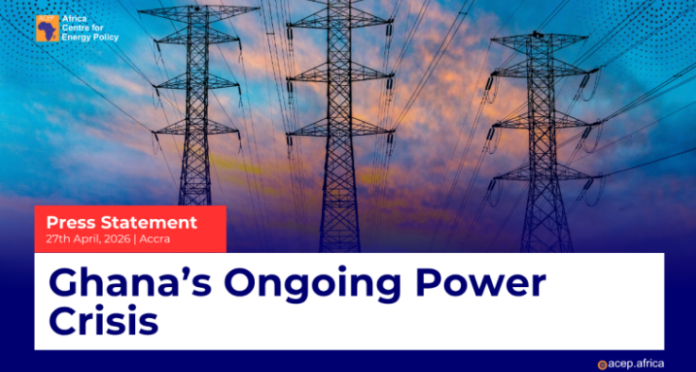
The Africa Centre for Energy Policy (ACEP) has raised serious concerns about what it describes as a deepening power crisis in Ghana, urging authorities to implement urgent reforms to stabilize the energy sector.
According to ACEP, the current challenges facing the electricity supply system require immediate attention to prevent further deterioration. The power crisis Ghana 2026 situation has been characterized by intermittent outages, operational inefficiencies, and growing pressure on existing infrastructure.
The call for reforms comes at a time when concerns about energy reliability continue to dominate national discussions.
Power Crisis Ghana 2026: ACEP Warns of Growing Challenges
ACEP has indicated that the power crisis Ghana 2026 is becoming more severe due to a combination of factors, including financial constraints, technical challenges, and management inefficiencies.
The think tank emphasized that without decisive action, the situation could worsen, affecting businesses, households, and the overall economy.
Experts note that the power crisis Ghana 2026 reflects systemic issues within the energy sector that require long-term solutions.
The organization has called for improved governance, better resource management, and strategic investments to address the underlying challenges.
Power Crisis Ghana 2026: Impact on Economy and Daily Life
The ongoing power challenges are having a significant impact on economic activities across the country.
The power crisis Ghana 2026 has affected businesses, particularly those that rely heavily on electricity for operations. Frequent outages can lead to increased costs, reduced productivity, and potential revenue losses.
For households, the situation has disrupted daily routines and highlighted the importance of reliable electricity supply.
Analysts warn that prolonged instability in the power sector could have broader economic implications if not addressed promptly.
Power Crisis Ghana 2026: Calls for Urgent Reforms
ACEP has outlined the need for comprehensive reforms to address the power crisis Ghana 2026 effectively.
The organization has urged government and stakeholders to prioritize policies that will improve efficiency, enhance transparency, and ensure sustainability in the energy sector.
Key recommendations include strengthening regulatory frameworks, investing in infrastructure, and improving coordination among sector players.
The call for urgent reforms underscores the need for a proactive approach to managing the country’s energy challenges.
As discussions continue, many Ghanaians are hoping for practical solutions that will restore stability and confidence in the power system.
The power crisis Ghana 2026 remains a critical issue, with stakeholders closely monitoring developments and responses from authorities.